
If you’re a New Jersey business owner, chances are you’ve Googled at least one tax question late at night with a pit in your stomach.
You’re not behind.
You’re not “bad at money.”
And you’re definitely not the only one feeling confused, overwhelmed, or unsure if you’re doing things right.
Most business owners were never taught how business taxes actually work, especially at the state and local level. This blog exists to replace that anxiety with clarity.
Below are the top 10 questions we hear from New Jersey business owners about taxes and business structure, answered calmly, clearly, and without judgment.
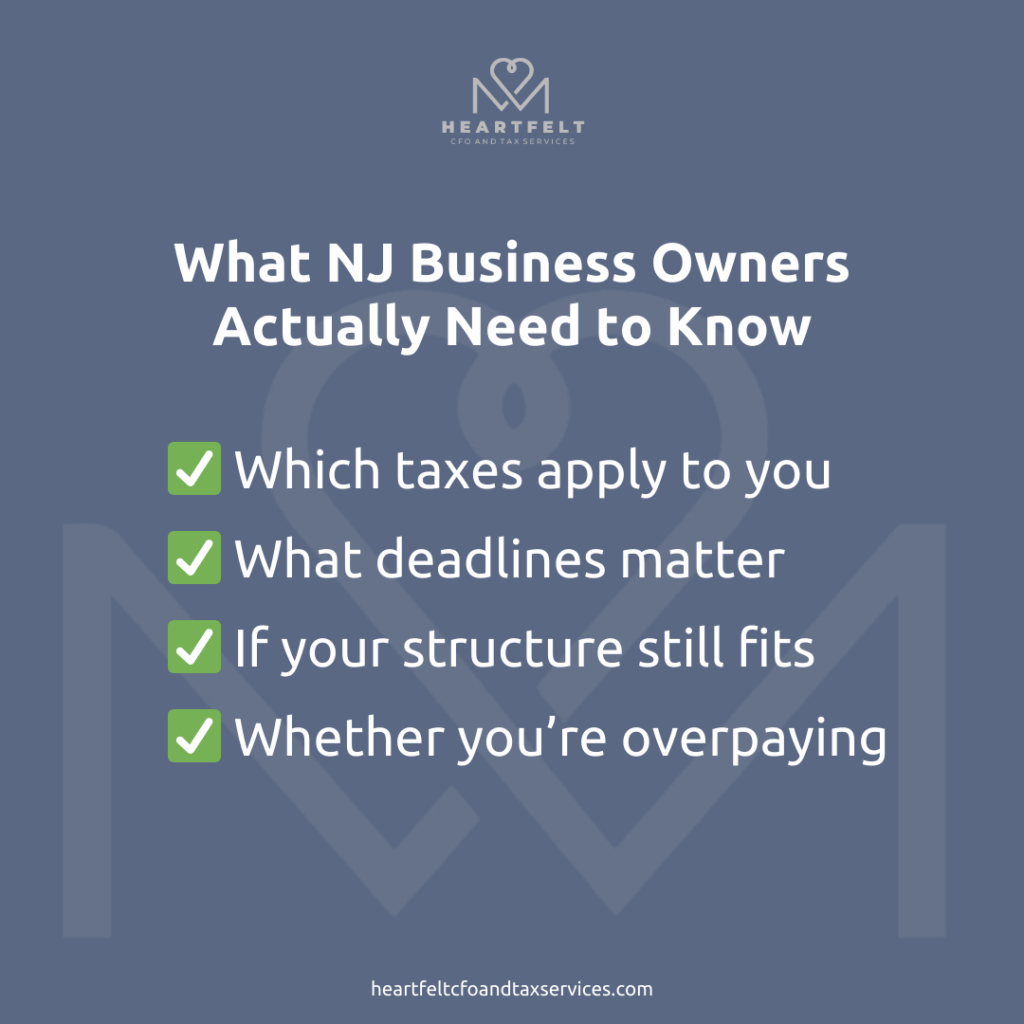
Business taxes aren’t just about filing forms once a year. They’re about:
-
choosing the right business structure
-
understanding which taxes apply to you
-
knowing when things are due
-
and having a plan so you’re not overpaying or panicking every spring
Let’s walk through the most common questions one by one.
The 10 Most Common NJ Business Tax Questions (Answered)
1. What types of businesses can I register in New Jersey?
In New Jersey, the most common business structures are:
-
Sole Proprietorship
-
Limited Liability Company (LLC)
-
S Corporation
-
C Corporation
-
Partnership
Most small businesses start as an LLC because it’s flexible and simpler to manage — but that doesn’t mean it’s always the best long-term option.
👉 Structure impacts taxes, liability, payroll, and planning, not just paperwork.
2. Do I need to register with both the state and the IRS?
Yes.
You’ll typically need:
-
A New Jersey business registration
-
An EIN from the IRS (even some single-member LLCs)
-
NJ tax accounts (sales tax, payroll tax, etc., if applicable)
Missing one of these steps is extremely common and fixable.
3. What are the most important dates I need to know for filing?
This is one of the biggest stress points.
While dates can vary by structure, here are the most common ones:
-
January 15 – Estimated tax payment (prior year)
-
March 15 – S-Corp & Partnership returns
-
April 15 – Personal & Single-member LLC returns
-
Quarterly – Estimated taxes & payroll filings
Knowing which dates apply to your business is part of tax planning, not something you’re expected to guess.
4. What are the general business tax brackets in Bergen County?
Here’s an important clarification:
👉 Bergen County does not have separate county-level income tax brackets for businesses.
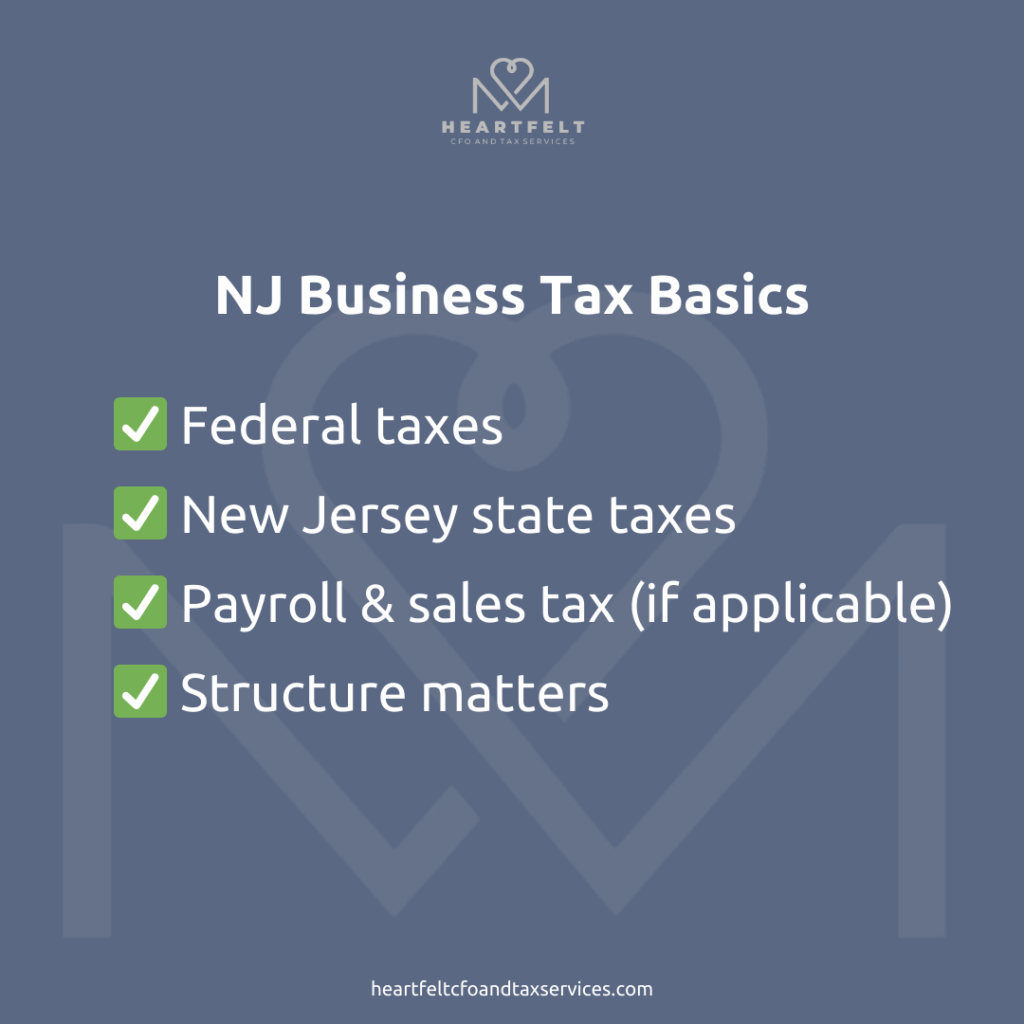
Instead, your taxes are impacted by:
-
Federal business tax rules
-
New Jersey state income or corporate taxes
-
Payroll taxes (if you have employees)
For example:
-
S-Corp owners pay themselves payroll + take distributions
-
LLC owners often pay self-employment taxes
-
NJ has a Corporation Business Tax for certain entities
Your structure matters more than your zip code.
5. Am I overpaying taxes?
This is one of the most common and most honest questions we hear.
If you:
-
don’t have a tax plan
-
only talk to your accountant once a year
-
aren’t sure why you owe what you owe
…then yes, there’s a strong chance you’re overpaying or missing opportunities.
Tax planning is proactive, not reactive.
6. Should I become an S-Corp?
Maybe. And maybe not.
An S-Corp can:
-
reduce self-employment taxes
-
improve cash flow
-
add structure
But it also adds:
-
payroll requirements
-
compliance costs
-
stricter rules
This decision should never be made based on a TikTok or a friend’s advice. It should be made with real numbers and forward-looking planning.
7. What records do I actually need to keep?
At minimum:
-
Income records
-
Expense receipts
-
Bank & credit card statements
-
Payroll records (if applicable)
Clean bookkeeping isn’t about perfection, it’s about consistency and clarity.
8. Do I need bookkeeping cleanup if I’m filing taxes anyway?
Yes — filing with messy books often means:
-
higher tax bills
-
missed deductions
-
inaccurate reporting
Bookkeeping cleanup creates the foundation for:
-
accurate tax returns
-
smarter planning
-
fewer IRS issues
9. How often should I be meeting with my accountant or CFO?
If the only time you talk to someone about taxes is during filing season, that’s reactive support.
Most growing businesses benefit from:
-
quarterly reviews
-
proactive tax planning
-
real-time financial insight
This is where virtual CFO services and fractional CFO for small business support come in.
10. When is the right time to get professional help?
If you’re thinking:
-
“I don’t fully understand my numbers”
-
“I’m making more money but feel more stressed”
-
“I’m scared I’m doing something wrong”
That’s your signal.
Support isn’t a failure, it’s a leadership decision.
A New Jersey Example
A Bergen County consultant came to us after three years of DIY bookkeeping. Revenue was growing, but taxes felt unpredictable and scary.
After:
-
cleaning up books
-
restructuring properly
-
building a tax plan
They stopped overpaying, started planning ahead, and finally felt in control of their business finances.
Why This Matters (Financially & Emotionally)
Without clarity:
-
taxes feel like a surprise
-
money decisions feel heavy
-
growth feels risky
With clarity:
-
you plan instead of panic
-
cash flow improves
-
confidence replaces shame
Tax planning is not just financial; it’s emotional relief.
Next Steps to Create Clarity for Your New Jersey Business
Here’s where to start, calmly and intentionally:
- Establish a tax plan based on your structure and income
- Review whether your current setup still fits your business
- Clean up bookkeeping so decisions are based on real numbers
- Get proactive support, not just year-end filing
If you’re ready to stop guessing and start leading your business with clarity:
Reach out to us to book a meeting, or choose a done-for-you cleanup or planning package if you’re ready to take action now
You don’t have to do this alone, and you don’t have to feel behind to ask for help.