
If tax season makes your chest tighten a little, you’re not alone.
Most business owners don’t struggle with taxes because they’re careless or irresponsible. They struggle because they’re running a business. You’re serving clients, managing people, handling growth, and making a thousand decisions a week — all while trying to keep the numbers “good enough.”
So if you’ve ever thought:
-
“I know my numbers aren’t perfect.”
-
“I hope I didn’t miss something.”
-
“I just want this done without surprises.”
Please hear this clearly: there is no shame here.
Preparing for business taxes isn’t about being perfect. It’s about being organized enough to make good decisions — and to stop tax season from running your nervous system every year.
This guide is designed to bring calm, clarity, and confidence. Not overwhelm.
What “Being Ready for Tax Season” Actually Means
Being “ready” for tax season does not mean:
-
Your books are flawless
-
You understand every tax rule
-
You’ve never made a mistake
It means this instead:
Your information is complete, accurate enough, and easy to follow.
When business owners feel stressed about business taxes, it’s usually because:
-
Information is scattered
-
Records are incomplete
-
Decisions were made without clarity earlier in the year
Tax season simply exposes what already exists.
That’s why a tax prep checklist matters. Not as a rigid rulebook — but as a stabilizing structure.
Common Mistakes (And Why They’re Extremely Normal)
Before we jump into the checklist, let’s normalize a few things.
If any of these apply to you, you are in very good company:
-
Mixing business and personal expenses
-
Catching up on bookkeeping right before taxes
-
Guessing how much to set aside for taxes
-
Assuming your accountant will “figure it out”
-
Filing based on last year’s approach, even though your business has grown
None of this means you’re bad at business.
It means your business has likely outgrown survival-mode systems.
And that’s actually a good sign.
The Calm-Clarity Checklist
This is the structure we use with clients to reduce anxiety and prevent last-minute scrambling.
Step 1: Financial Records That Tell a Clear Story
Your tax professional can only work with what exists. The clearer your records, the fewer questions, corrections, and surprises later.
You’ll want to have:
-
Profit & Loss Statement (for the full year)
-
Balance Sheet (year-end snapshot)
-
Business bank and credit card statements
-
Bookkeeping files (QuickBooks, Xero, or equivalent)
Step 2: Income That’s Fully Accounted For
This is one of the biggest stress points for business owners — not because income is confusing, but because it comes from multiple places.
Make sure you gather:
-
1099-NEC / 1099-K forms
-
Payment processor summaries (Stripe, Square, PayPal, etc.)
-
Invoices issued but not yet paid
-
Any cash or off-platform income
Clarity here prevents:
-
Overreporting
-
Underreporting
-
Panic letters from the IRS later
Step 3: Expenses That Are Organized (Not Just Saved Somewhere)
Saving receipts is helpful.
Categorizing them correctly is what actually reduces business taxes.
Have records for:
-
Office expenses
-
Software & subscriptions
-
Professional services
-
Marketing & advertising
-
Travel & meals (business-related)
-
Equipment purchases
If your expenses are lumped into “miscellaneous,” this is often where money is quietly lost.
Step 4: Payroll, Contractors, and Compliance Items
If you pay people — even occasionally — this section matters more than most owners realize.
You’ll want:
-
Payroll reports
-
Payroll tax filings
-
Contractor payments
-
Issued 1099s
-
State and federal compliance records
Missing or mismatched payroll data is one of the most common reasons returns get delayed.
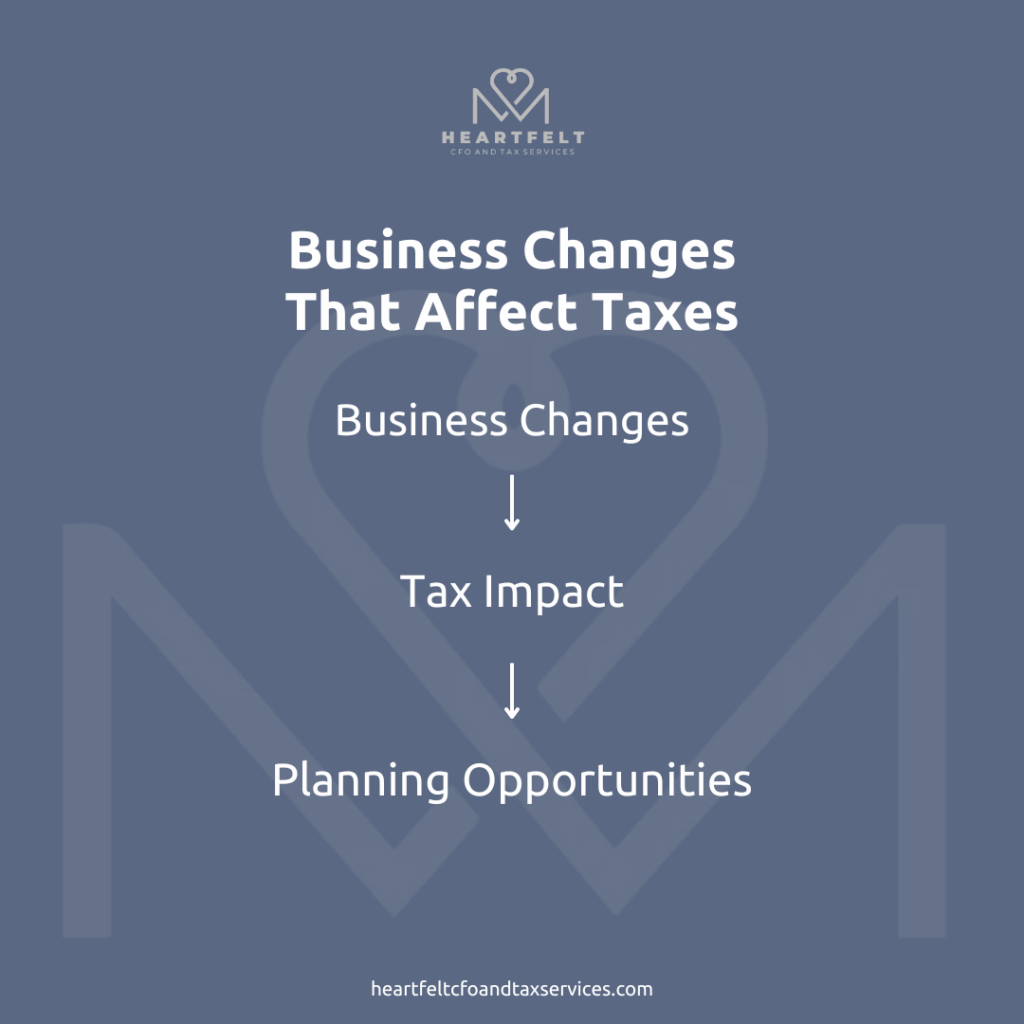
Step 5: Business Details & Changes
Small changes can have big tax implications.
Prepare:
-
Business entity information
-
Ownership changes
-
Address changes
-
New states you operated in
-
New revenue streams
-
Equipment purchases or asset sales
This context helps your tax preparer see the full picture, not just the numbers.
What This Looks Like in Real Life
Let’s take a very common scenario.
A service-based business owner has grown steadily. Revenue is up. Expenses are scattered. Bookkeeping was “good enough” most of the year.
By the time tax season arrives:
-
Income is higher than expected
-
Deductions aren’t fully captured
-
Estimated taxes were underpaid
-
Stress is high
After organizing records and cleaning up the books:
-
Income is clearly tracked
-
Legitimate deductions are captured
-
Cash flow becomes predictable
-
Taxes stop feeling like a surprise bill
The numbers didn’t change.
The clarity did.
Why This Matters — Financially and Emotionally
Let’s be honest.
Business taxes aren’t just a financial issue. They affect:
-
Sleep
-
Confidence
-
Decision-making
-
Your relationship with money
-
Your ability to plan ahead
When you’re prepared:
-
You stop bracing for impact
-
You stop fearing emails from your accountant
-
You stop feeling like taxes are happening to you
Instead, you gain:
-
Predictability
-
Control
-
Options
This is where tax planning becomes self-care — not because it’s fun, but because it creates stability.
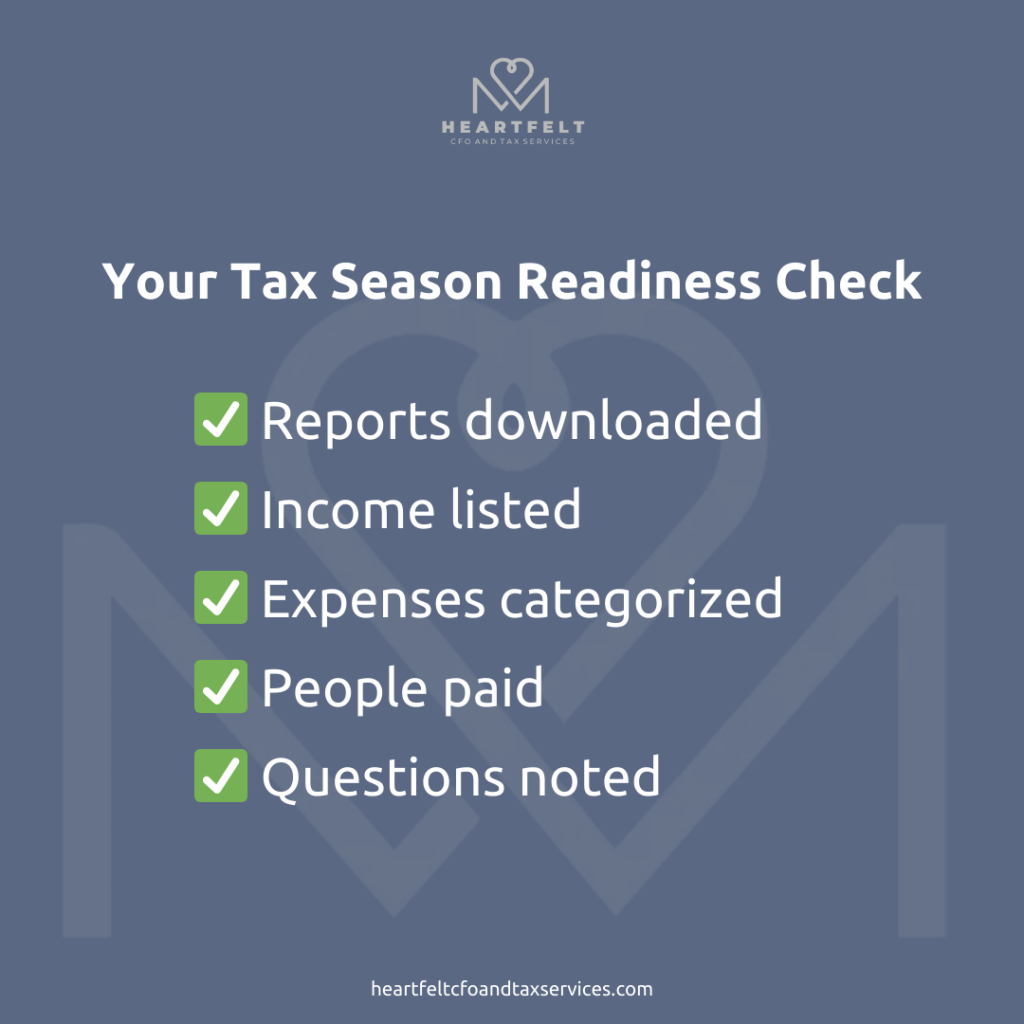
Practical Next Steps You Can Take This Week
You don’t need to do everything today. Start with what’s manageable.
Here are 5 calm, doable steps:
- Download your financial reports (even if they’re messy)
- List all income sources for the year
- Separate personal vs. business expenses
- Note any major business changes
- Identify what feels unclear or uncomfortable
That last step is important. Confusion is a signal — not a failure.
You Don’t Have to Do This Alone
If reading this made you think:
-
“I need help organizing this.”
-
“I want to stop guessing.”
-
“I want a calmer tax season next year.”
That’s exactly where support helps most.
Book a Meeting
If you want clarity, guidance, and a calm plan forward, we’ll help you understand what you actually need, no pressure.
Buy a Package
If you’re ready for bookkeeping cleanup, tax planning, or ongoing CFO-level support, we’ll handle the heavy lifting so you can focus on your business.
You don’t need to be “ready enough” to reach out.
Clarity comes after support — not before.
Being prepared for tax season isn’t about proving anything.
It’s about building a business that feels organized, grounded, and sustainable — financially and emotionally.
And that is a leadership decision worth making.